
Cash Flow Problems: Causes, Early Warnings and Fixes
Cash flow problems hit profitable businesses too. Learn the common causes, how to spot a gap early with a 13-week forecast, and the fixes that work.
Cash Flow Problems: Causes, Early Warnings and Fixes

A cash flow problem means bills fall due before the money to pay them arrives. A business can be profitable on paper and still have it. The fix starts with a clear view of your next 13 weeks of cash, then a diagnosis of whether the gap comes from late customers, thin margins or heavy overheads. With us, each client has a named accountant and cloud bookkeeping, so the numbers behind that view are current rather than months old.
Key Takeaways
- Profit and cash are different things. Profit is what you earned. Cash is what is in the bank on the day a bill is due.
- A rolling 13-week forecast, updated weekly, shows the lowest point your bank balance will reach, and when.
- Diagnose before you borrow: timing, margin and overhead problems each need a different response.
- Unpaid invoices are the most controllable cause. Clear terms, prompt invoicing and early chasing help most.
- Tax bills (VAT, corporation tax, Self Assessment, payroll) are predictable, so they should never come as a surprise.
Table of Contents
- What a cash flow problem actually is
- The most common causes of cash flow gaps
- How to see a gap coming: the 13-week forecast
- Diagnose before you borrow
- What to do first when a gap appears
- Getting unpaid invoices paid
- How we help you stay ahead of cash flow
- Preventing the next gap
- FAQ
- Sources
What a cash flow problem actually is
Cash flow is the movement of money in and out of your bank account. A cash flow problem arises when money going out in a given week is greater than money available. It is not the same as making a loss. A loss means your costs over a period exceeded your sales. A cash flow gap is about timing.
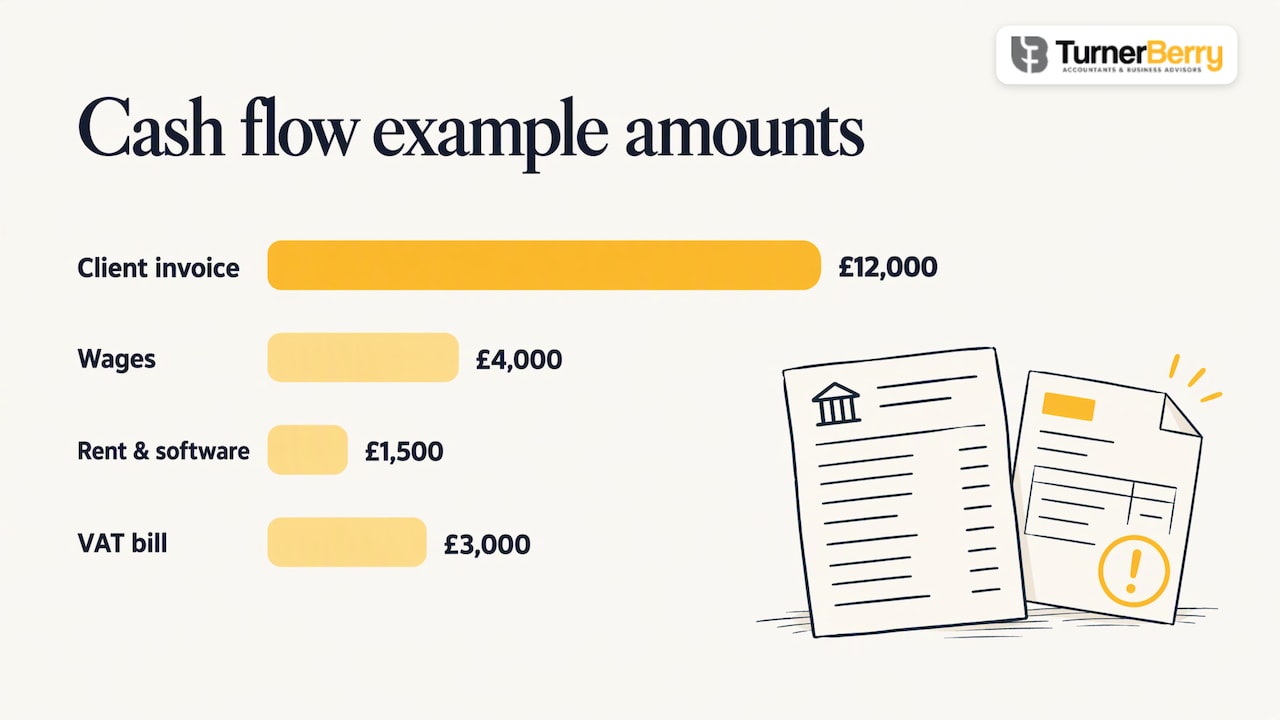
Here is a simple example. A Bristol design studio invoices a client £12,000 on 30-day terms in March. In the same month it pays £4,000 in wages, £1,500 in rent and software, and a £3,000 VAT bill. The job is profitable, yet the studio is £8,500 short until the client pays. If that client pays on day 60, the gap lasts twice as long.
Many owners only notice this when the overdraft is used up. Spotting it earlier is the whole game. Tees Valley Combined Authority’s guidance on managing a business in financial difficulty sums it up: with cash you can buy time, and with time, options.
The most common causes of cash flow gaps
Customers who pay late or not at all
Unpaid invoices are the usual culprit. You have already paid for the labour or materials, but the money sits with the customer. A single large late payer can leave a small business unable to cover payroll.
Costs that arrive in lumps
VAT, corporation tax, PAYE (the tax and National Insurance you deduct from staff pay) and Self Assessment bills land on fixed dates. If the money has not been set aside, they create a sudden hole. Our guide to how to pay your corporation tax bill explains when that payment is due. Our page on VAT returns covers the quarterly rhythm.
Pressures outside your control
The Scottish Government’s business guidance lists external pressures including customers or suppliers going out of business, VAT, inflation or interest rate changes, new competitors, loan availability and new legislation. You cannot prevent these, but a forecast shows how much room you have when one hits.
Growth that outruns your cash
A new contract means buying stock, hiring and paying suppliers before the first invoice is settled. Fast growth is a common reason profitable firms run short. Our page for growing businesses covers planning for this.
Overspending and over-optimistic sales forecasts
Buying stock you do not sell quickly, or budgeting on hoped-for sales, ties cash up or leaves you short. Both are easier to see when your books are up to date. If yours are behind, catch-up bookkeeping is the place to start.
How to see a gap coming: the 13-week forecast
A forecast is an early warning system, not a perfect prediction. Enterprise Nation’s finance guidance recommends a rolling 13-week forecast, updated weekly. For each week it includes:
- the opening bank balance
- expected receipts from customers
- supplier payments, payroll, rent, energy and utilities
- VAT, tax and loan repayments
- stock purchases and other fixed costs
- the closing balance
Then ask three questions: what is the lowest projected balance, when does it happen, and what causes it? Once you know that, you can act before you reach it.
Be honest with receipts. Use the date a customer will actually pay, based on their history, not the date on the invoice. Update the forecast every week with real figures and roll it forward by a week.
Business Wales also advises reviewing cashflow at least once a week, keeping at least one month’s cash reserve and not spending more in a week than was in the bank the previous week. For many small firms a month’s reserve is a stretch target, but even a partial buffer changes how a late payment feels.
Diagnose before you borrow
Enterprise Nation’s finance mentor advises not to borrow before diagnosing the problem. A shortage can be one of three things, and the response differs:
| Type of problem | What it looks like | Typical response |
|---|---|---|
| Timing | Profitable, but customers pay after your bills fall due | Faster invoicing, firmer terms, chasing, agreed supplier terms |
| Margin | Every sale earns too little after costs | Review pricing and direct costs |
| Overheads | Fixed costs too high for current sales | Cut or renegotiate costs, review subscriptions and premises |
Borrowing to cover a margin problem only delays it and adds interest. Borrowing for a short, well-understood timing gap can be sensible, but you need a forecast showing when it will be repaid. When you talk to your bank, the Scottish Government advises you share forecasts, break bad news promptly and avoid unrealistic promises.
What to do first when a gap appears
Act straight away. Business Wales suggests that if short-term problems look likely you should reassure suppliers, chase money owed, cut expenditure and talk to the bank about overdraft arrangements. In practice:
- Chase the biggest overdue invoices first. Phone, do not only email.
- Rank your payments. Wages, HMRC and rent come before discretionary spending.
- Talk to suppliers early. Asking for a few extra days before the due date is far better than missing it.
- Pause non-essential spending until the forecast improves.
- Speak to your accountant. They can tell you which tax payments are fixed and which options exist.
If you cannot meet a tax bill, contact HMRC before the due date rather than after.
Getting unpaid invoices paid
Late invoices are the most controllable cause of a gap. Business Wales’ getting-paid checklist advises clear payment terms, invoicing as soon as work is finished, reminding the customer a few days before the due date, and phoning if payment is late. A good invoice also shows the due date, bank details and VAT or company registration numbers where they apply.
You also have a legal lever. Under the Late Payment of Commercial Debts (Interest) Act 1998, Business Wales says you can charge interest on an overdue payment after 30 days. Lewis Silkin’s legal guidance explains that the Act implies an interest term into business contracts where none is written. That interest is 8% above the Bank of England base rate, plus a fixed sum per debt and reasonable recovery costs. The same guidance notes that penalty clauses must be proportionate or they may be unenforceable.
Other contractual options from that guidance:
- early payment discounts, for example 5% for payment within 7 days
- deposits or staged payments on larger jobs
- longer, documented payment terms with your own suppliers
Worked example: a £10,000 invoice with a 5% early payment discount brings in £9,500 within a week. That costs £500, but it may be cheaper than an overdraft if you would otherwise be short for 60 days.
How we help you stay ahead of cash flow
A forecast is only as good as the records behind it. Our accountancy clients work with a named accountant and use cloud accounting and our own client platform, so invoices, bills and bank transactions stay current. Fixed monthly fees mean you know what support costs. We handle bookkeeping, VAT, corporation tax, payroll and Self Assessment, so tax dates are known and planned for rather than discovered.
If you run a limited company in Bristol or Cardiff and want your numbers kept up to date, look at our limited company accounts service or get in touch through turnerberry.co.uk. Switching from a previous accountant is something we manage for you.
Preventing the next gap
Once the immediate pressure eases, build habits that stop it returning:
- Keep the 13-week forecast going every week, not only in a crisis.
- Set aside VAT and tax money as you invoice, in a separate account.
- Credit-check new customers and watch for warning signs such as evasive replies or lots of invoice queries, as the Scottish Government advises.
- Keep a contingency plan for the loss of a major customer.
- Document any supplier payment extensions in writing.
- Review pricing yearly so margins keep up with costs.
This article is general information, not advice for your circumstances. Your accountant can look at your own figures.
FAQ
Can a profitable business have cash flow problems?
Yes. Profit counts sales and costs over a period, while cash flow tracks when money actually moves. If customers pay after your bills are due, or tax bills arrive in one lump, you can be short even when you are making a profit.
How far ahead should I forecast cash flow?
A rolling 13-week forecast, updated weekly, is the approach recommended by Enterprise Nation. It is long enough to see tax bills and payroll coming, and short enough to stay realistic.
Can I charge interest on late invoices?
Under the Late Payment of Commercial Debts (Interest) Act 1998, business customers can be charged statutory interest on overdue invoices. Business Wales says this can start after 30 days. Put clear payment terms on every invoice.
What should I do if I cannot pay a bill on time?
Contact the supplier or lender before the due date, explain the situation and propose a realistic date. For tax, contact HMRC early. Your accountant can help you prioritise what to pay first and prepare the forecast you will need to show.
Sources
- Identifying cashflow problems, mygov.scot
- Cashflow forecast, Business Wales
- How to manage your finances for sustainable growth, Enterprise Nation
- Managing a business in financial difficulty, Tees Valley Combined Authority
- Contractual ways to improve cash flow, Lewis Silkin
Recommended
This guide is general information based on the rules when it was published on 24 November 2026. It isn't advice for your situation, so talk to us before acting on it.
NEED A HAND?
Talk it through with us.
Every business is different. Book a free discovery call and get advice for your situation.